It’s been a while since I posted anything astro-related… heck.. anything at all, so consider this a pseudo-reset. Here’s where the setup stands right now, how the data actually gets from sensor to finished image, and what’s currently queued up on the mount.
The Hardware
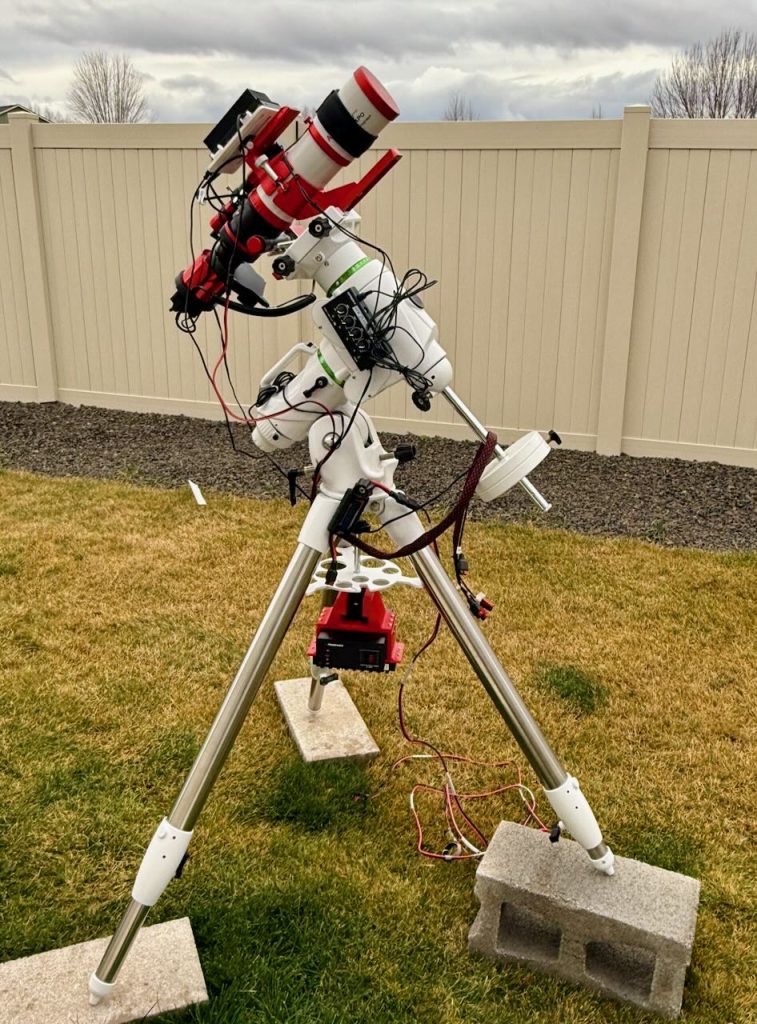
The core rig is a small refractor, the ASKAR FRA300 Pro astrograph, riding on a Skywatcher EQ6-R mount, guided and dew-heated, running in the back yard. The camera is a mono ZWO ASI1600mm Pro CMOS sensor — 4656×3520, 3.8µm pixels — pairing it with the 300mm focal length scope, puts me solidly in wide-field territory. That’s the sweet spot for big, sprawling targets like the Veil, North America Nebula, and Rosette nebula for examples.
Everything is captured in narrowband: Ha, OIII, and SII, one at a time, shot mono so each channel gets full-resolution, unpolluted data instead of a Bayer-interpolated mess. It costs more time per target, but the SNR and detail payoff on faint emission targets makes it worth it. The narrowband also helps cut through the Bortle 5.5 light pollution of Caldwell, Idaho.
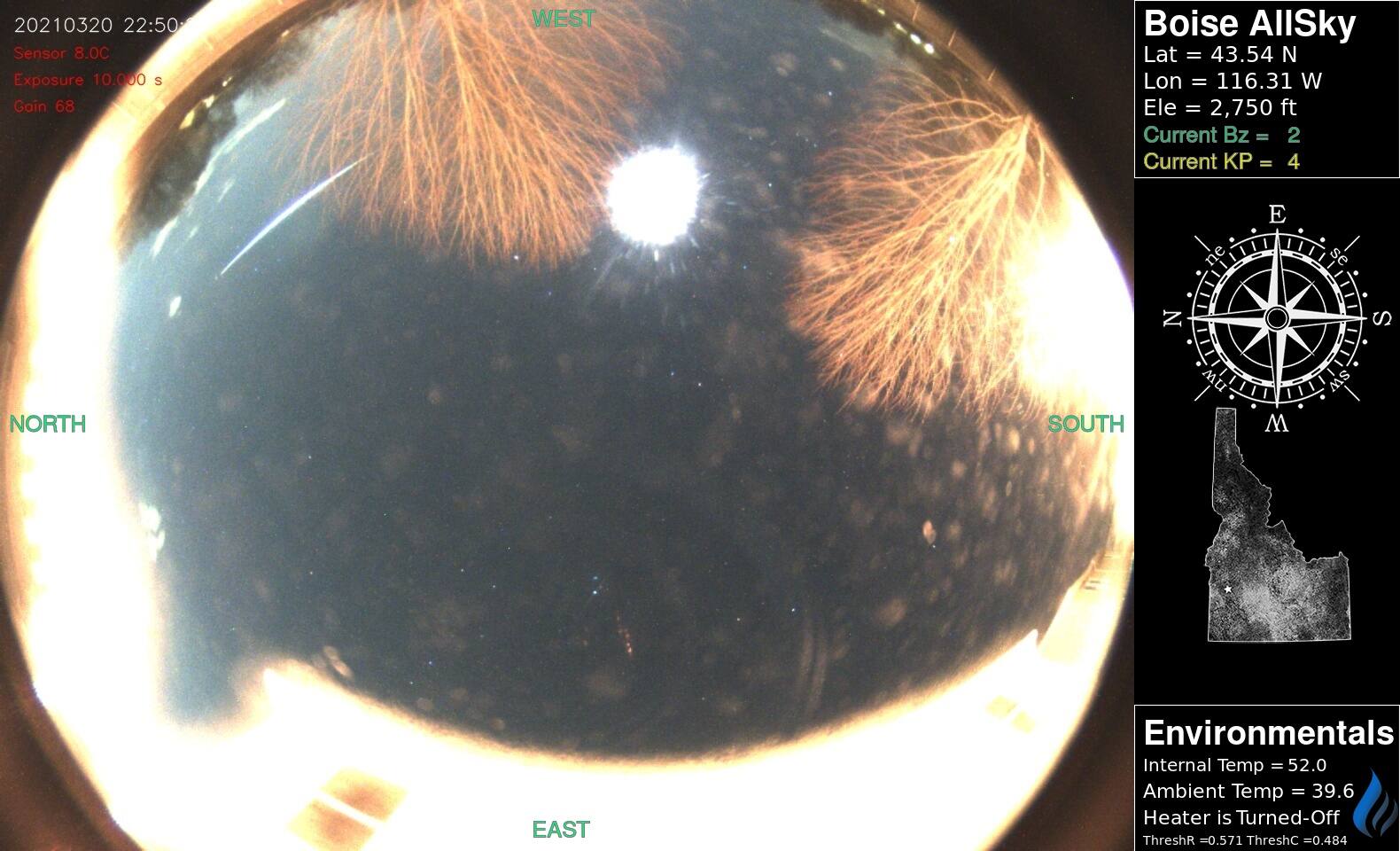
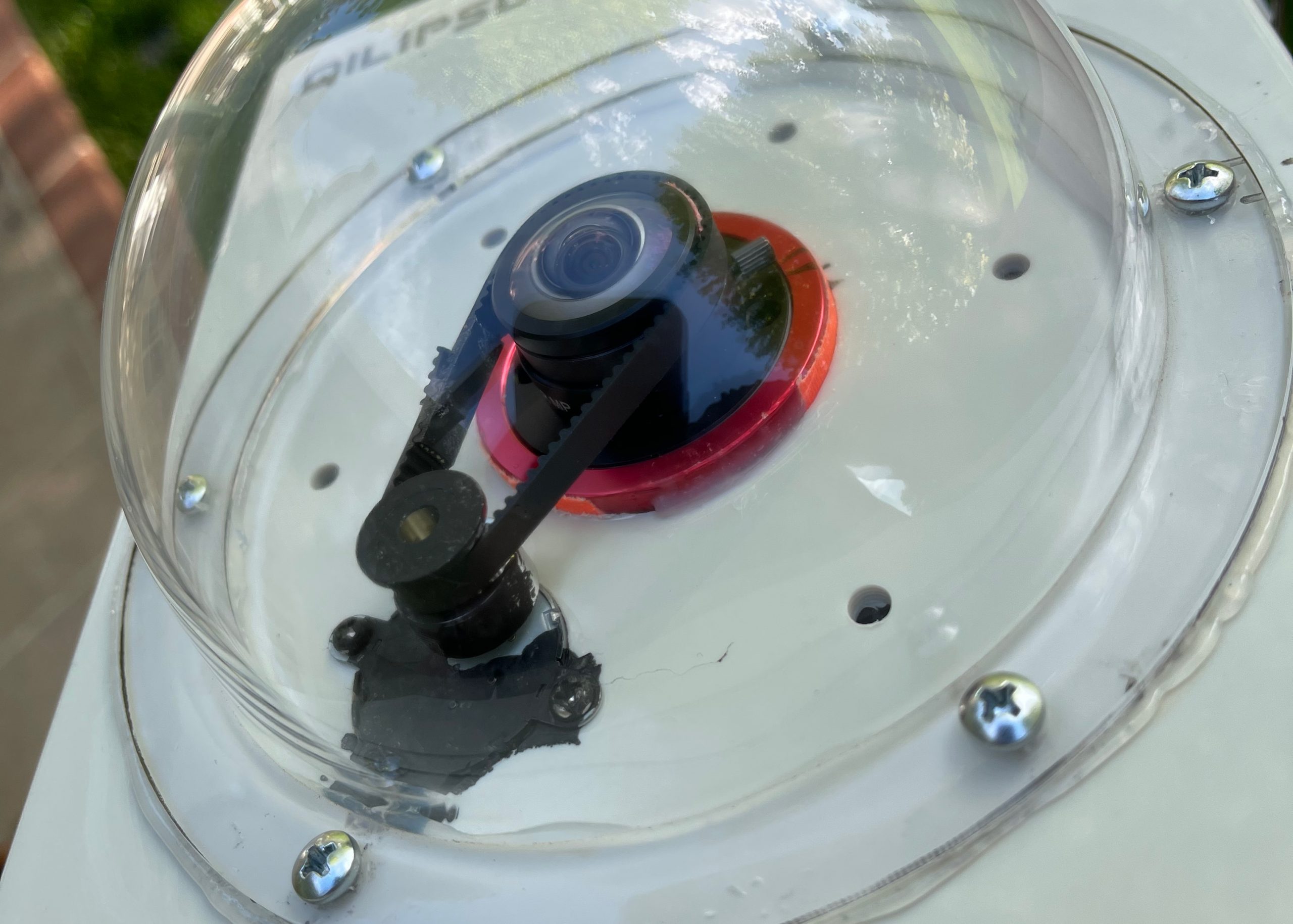
Alongside the main rig, the AllSky camera keeps running in the background — a fixed all-sky Raspberry Pi setup that captures the whole sky-dome every night regardless of what the main scope is pointed at. It’s not part of the deep-sky workflow directly, but it’s useful for two things: sanity-checking sky transparency/cloud cover before committing to a multi-hour narrowband session, and just having a nightly timelapse of the sky as a byproduct. Same Pi ecosystem as the weather station and data loggers feeding into Grafana/InfluxDB on the NAS, so it’s all part of one loosely connected home-observatory network.
Planning and Acquisition
Framing starts in a planning tool, N.I.N.A., where I punch in camera specs (sensor size, pixel size, focal length) and target coordinates, then lay out a mosaic grid with panel count, overlap percentage, and rotation. For the Veil, that’s a 1×2 panel mosaic with 20% overlap and a rotation dialed in to match the camera’s actual orientation on the sky — the tool spits out RA/Dec and rotation for each panel, which gets slewed to and centered before the sequence starts.
From there, acquisition is scripted rather than manually babysat: N.I.N.A. sequencer handles slew-and-center, filter changes, exposure sequences, dithering between subs, and meridian flips, all while logging everything so a bad frame (satellite trail, cloud, guide hiccup) can get flagged and tossed before it ever reaches the stacking stage. Every sub gets a descriptive filename baked in — binning, dimensions, exposure length, filter, session, and panel — which makes life a lot easier once you’ve got a few hundred files from three filters across two panels.
Processing
Calibration and stacking happen in PixInsight: bias/dark/flat calibration, registration, and integration per filter, per panel, producing a master light for each combination (for example, a single 300s Ha master per panel). From there it’s the usual narrowband path — gradient removal, stretching, noise reduction, and if it’s a full SHO set, channel combination into a synthetic RGB palette before final color and contrast work.
A fair amount of the repetitive parts — batch renaming, sorting subs into the right calibration groups, culling frames based on FWHM/eccentricity logs — gets handled with a series of small Python scripts rather than by hand. Nothing fancy, just enough automation that a two-panel mosaic doesn’t turn into an afternoon of file shuffling. The RAW archives live on my home Synology NAS, being held safe for future use & processing.
Current Project: The Veil Nebula
Right now the target is the Veil Nebula (NGC 6960/6992) in Cygnus, shot as a 1×2 vertical mosaic in Ha to start, with OIII and SII to follow per panel. Below is a stretched master Ha light from panel 2 — the eastern arc of the Veil, with the fainter filamentary structure already showing even before OIII/SII get layered in for the full palette.
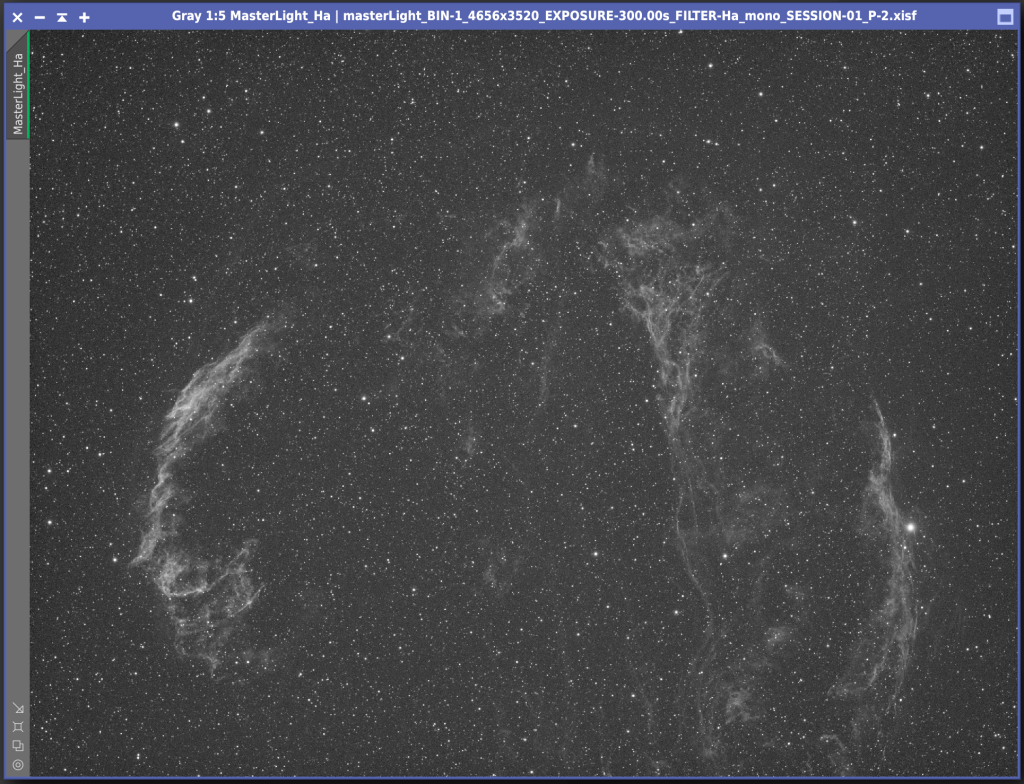
Once both panels are complete across all three filters, the plan is SHO integration per panel, then a mosaic stitch to get the full Veil complex in one frame. More on that once it’s stacked.